


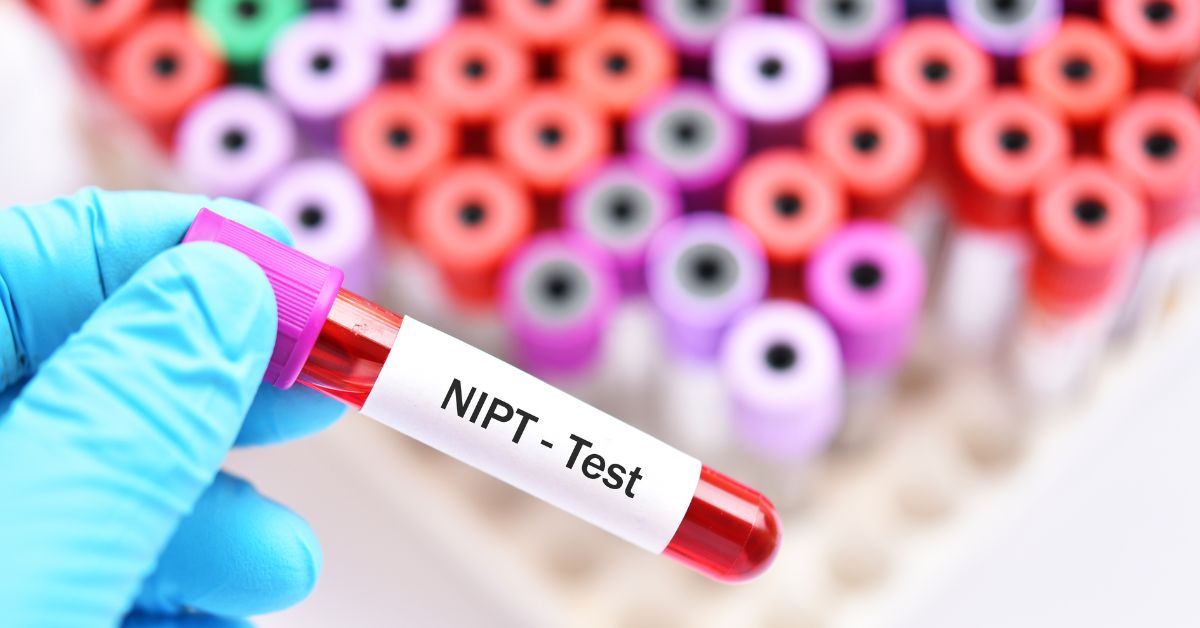
Every expectant parent wants the best for their baby, starting from pregnancy. Various screening tests have been developed to ensure a healthier pregnancy, one of which is Non-Invasive Prenatal Testing (NIPT).
This prenatal test provides detailed information about fetal health, allowing parents to prepare more comprehensively.
For further reading, see:
“TORCH Screening During Pregnancy: Purpose and Procedure”
What Is Non-Invasive Prenatal Testing (NIPT)?
NIPT is a prenatal screening test used to detect chromosomal abnormalities in the fetus by analysing a blood sample from the mother.
This non-invasive test can be performed from 10–14 weeks of pregnancy. While not required for all pregnancies, NIPT is recommended in certain conditions to ensure fetal well-being.
With an accuracy rate of up to 99%, NIPT allows early detection of chromosomal abnormalities, enabling parents to plan appropriate medical care.
Genetic Conditions Detectable by NIPT
1. Down Syndrome (Trisomy 21)
A common chromosomal condition caused by an extra copy of chromosome 21. It may result in distinctive physical features and intellectual developmental delays.
2. Edwards Syndrome (Trisomy 18)
This condition is characterised by low-set ears, small jaw and head, cleft palate, and limb abnormalities.
3. Patau Syndrome (Trisomy 13)
Caused by an extra copy of chromosome 13, leading to cleft lip or palate, low-set ears, and small eyes.
4. Sex Chromosome Abnormalities
NIPT can identify abnormalities such as XO, XXX, XXY, and XYY, in addition to determining fetal sex (XX or XY).
5. Y Chromosome Microdeletion
A genetic condition caused by missing genes on the Y chromosome, often affecting male fertility later in life.
NIPT Screening Results
1. Low Risk
Indicates a low likelihood of chromosomal abnormalities involving chromosomes 13, 18, or 21.
2. High Risk
Suggests a higher probability of chromosomal abnormalities. Further diagnostic testing, such as amniocentesis, may be recommended.
3. No Result
Occurs when insufficient fetal DNA is obtained for accurate analysis. Repeat testing may be required.
4. Inconclusive Fetal Sex
Insufficient data to determine fetal sex; this does not affect chromosomal analysis accuracy.
Benefits of NIPT
1. High Accuracy
With up to 99% accuracy, NIPT provides reliable early screening.
2. Comprehensive Screening
Analyses all 23 chromosome pairs using only 10 ml of maternal blood.
3. Safe for Mother and Baby
As a non-invasive test, NIPT poses no risk to pregnancy and allows early preparation for optimal care.
For further reading, see:
“What Is Antenatal Care? Purpose and Types”
Find Trusted NIPT Services in Denpasar
NIPT services are available at various healthcare facilities. For reliable and comprehensive NIPT screening in Denpasar, visit RSIA Bunda Denpasar.
RSIA Bunda Denpasar offers modern facilities providing NIPT, antenatal care, women’s health services, maternity care, 24/7 emergency services, teleconsultation, and home care.
Contact our team to learn more about available health screening packages.
